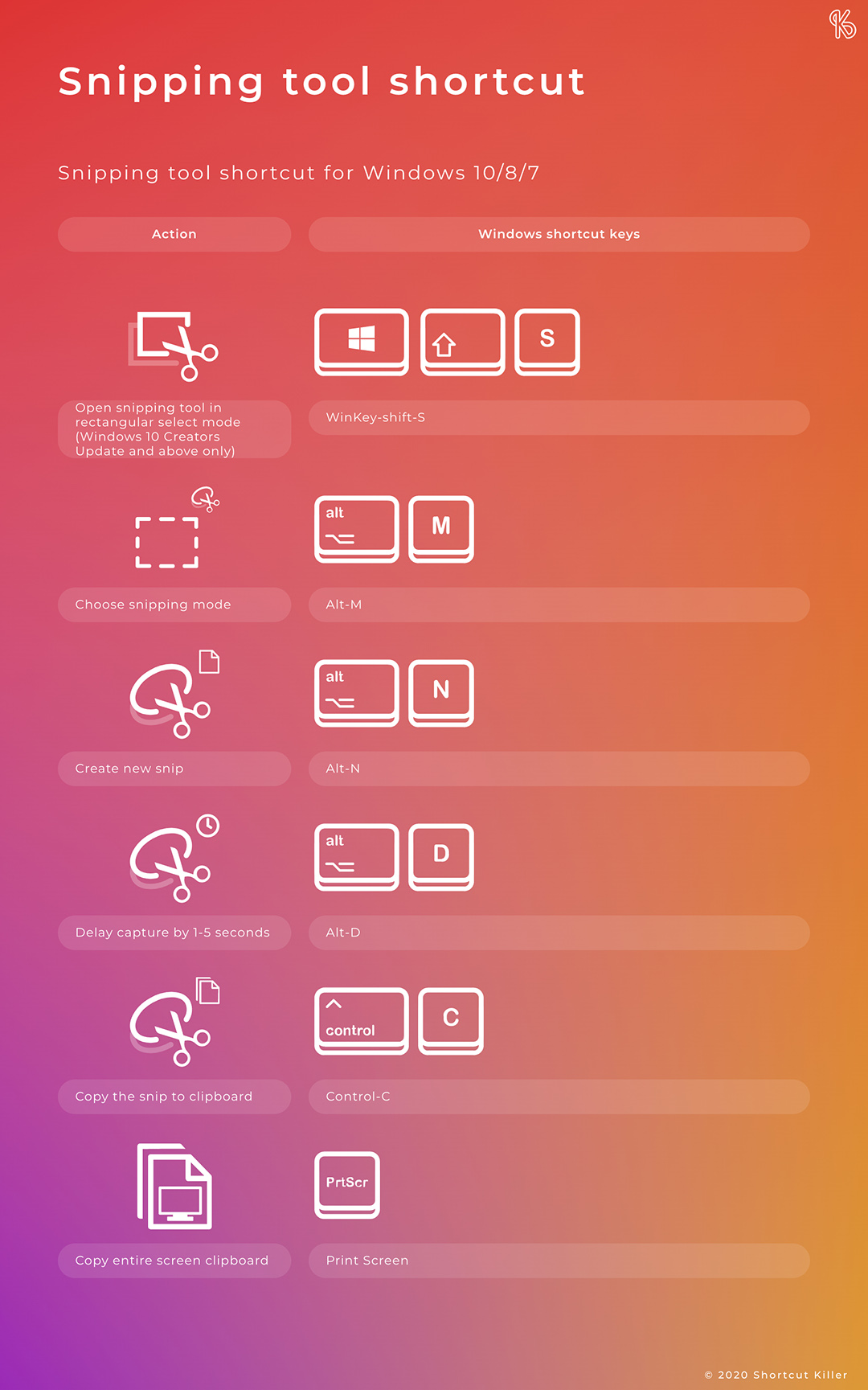
Shortcut Keys
Keyboard shortcuts are keys or combinations of keys that provide an alternative way to do something that you’d typically do with a mouse. Click an option below, and it'll open to display a table of related shortcuts: Top keyboard shortcuts. If you are using Windows regularly, using these Windows keyboard shortcuts will definitely increase your productivity. Compiled below is an exclusive list of shortcuts that will help you breeze through your daily work.
- Find Shortcuts On Computer
- Shortcut Keys In Microsoft Word
- Windows 10 Shortcut Keys Enable
- Shortcut Keys In Keyboard
- Shortcut Keys Of Computer
Using keyboard shortcuts can greatly increase your productivity, reduce repetitive strain, and help keep you focused. For example, to copy text, you can highlight text and press the Ctrl+C shortcut. The shortcut is faster than moving your hands from the keyboard, highlighting with the mouse, right-clicking, selecting copy, and returning to the keyboard.
Below are the top 10 keyboard shortcuts we recommend everyone memorize and use.
Ctrl+C or Ctrl+Insert and Ctrl+X
Both Ctrl+C and Ctrl+Insert will copy highlighted text or a selected item. If you want to cut an item instead of copying it, press Ctrl+X. This action removes the text or item and stores it in the clipboard , rather than copying it to the clipboard.
Apple computer users can substitute the Ctrl key for the Command on their computers. For example, pressing Command+C copies highlighted text.
Ctrl+V or Shift+Insert
Both the Ctrl+V and Shift+Insert will paste the text or object that's stored in the clipboard.
On Apple computers, use Command+V instead.
Practice
Use the above text input fields to highlight the 'Cut or copy this text' text and press either Ctrl+C to copy or Ctrl+X to cut the text. Once cut, move to the next field and press Ctrl+V or Shift+Insert to paste the text. For further demonstration, visit the following link.
Ctrl+Z and Ctrl+Y
Pressing Ctrl+Z will undo any change. For example, if you cut text, pressing this key combination will undo the cut. These shortcuts can also be pressed multiple times to undo or redo multiple changes. Pressing Ctrl+Y would redo the undo.
On Apple computers, use Command+Z and Command+Y to undo and redo.
Use the above text input field to highlight some or all the text and then press Ctrl+X to cut the text. Once the text has disappeared, press the Ctrl+Z to undo the cut.
TipIf you did the first example as well (cut and paste text) and you continue to press Ctrl+Z, it will undo that change.
Ctrl+F and Ctrl+G
Pressing Ctrl+F opens the Find field, which allows you to search the text currently displayed in any program that supports it. For example, Ctrl+F can be used in your Internet browser to find text on the current page. Press Ctrl+F now to open the Find in your browser and search for 'shortcut' to display each time shortcut is mentioned on this page.
On Apple computers, use Command+F to find.
Ctrl+G may be used to repeat a search (from using Ctrl+F) in a document or on a web page.
Alt+Tab or Ctrl+Tab
Pressing Alt+Tab switches between open programs moving forward. For example, if you have your browser window open and other programs running in the background, press and hold Alt, then press the Tab key to cycle through each open program.
On Apple computers, instead of using the Alt key use the Command (Cmd) key. For example, Command+Tab to switch between open programs.
Bonus TipPress Ctrl+Tab to switch between tabs in a program. For example, if you have multiple tabs open in your Internet browser, press Ctrl+Tab to switch between them.
Bonus TipAdding the Shift key to Alt+Tab or Ctrl+Tab moves backward. For example, if you are pressing Alt+Tab and pass the program you want to use, press Alt+Shift+Tab to move back to that program.
Bonus TipWindows Vista, 7, 8, and 10 users can also press the Windows key+Tab to switch through open programs in a full screenshot of the window.
Ctrl+Backspace and Ctrl+Left or Right arrow
NoteThe following shortcuts are for PC users only and do not work on Apple computers.
Pressing Ctrl+Backspace deletes a full word at a time instead of a single character.
Holding down the Ctrl while pressing the left or right arrow moves the cursor one word at a time instead of one character at a time. If you want to highlight one word at a time, hold down Ctrl+Shift, then press the left or right arrow key. Your highlighted selection moves one word at a time in that direction.
Ctrl+S
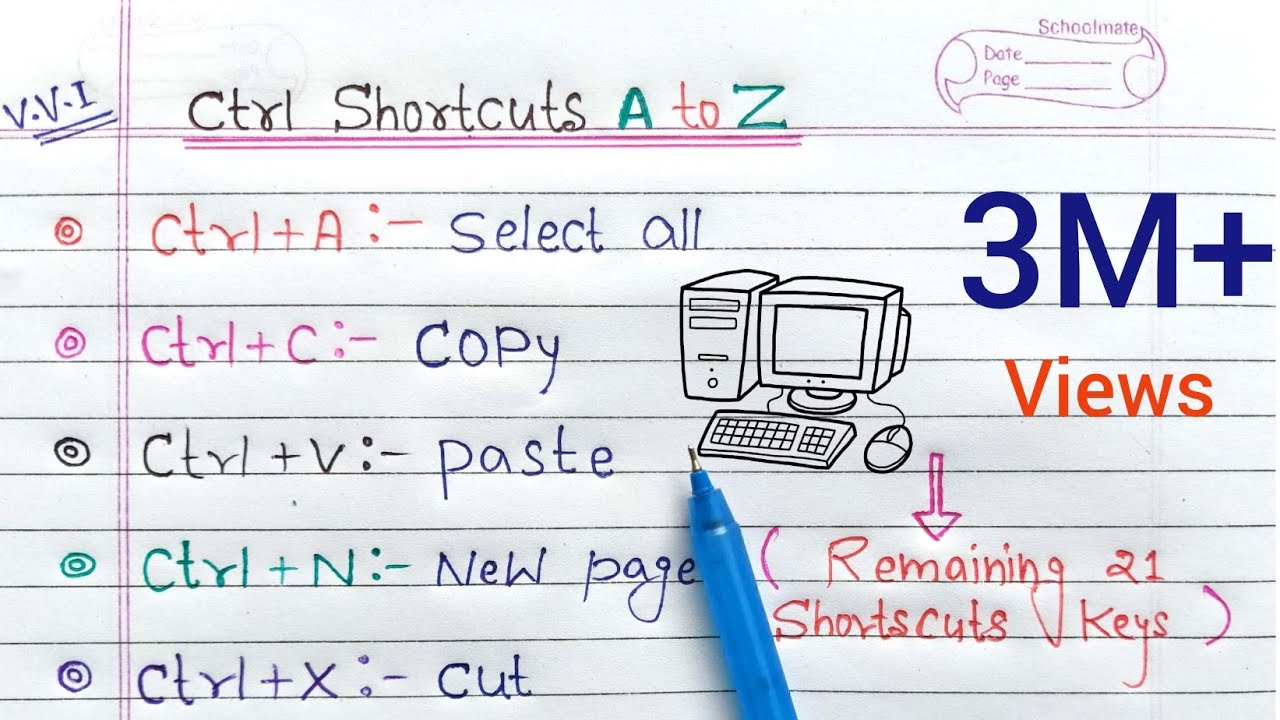
While working on a document or another file in almost every program, pressing Ctrl+Ssaves that file. Use this shortcut key frequently when working on anything important in case of an error, lost power, or any other issues causing you to lose work since the last save.
On Apple computers, use Command+S to save a file.
Ctrl+Home or Ctrl+End
Ctrl+Home moves the cursor to the beginning of the document, and Ctrl+End moves the cursor to the end of a document. These shortcuts work with most documents, and web pages.
On Apple computers, use the Command+Up arrow to get to the beginning or Command+Down arrow to get to the end of a document or text.
Ctrl+P
Ctrl+P is used to open a print preview of the page or document currently being viewed. For example, press Ctrl+P now to view a print preview of this page.
On Apple computers, use Command+P to open the print preview.
Page Up, Spacebar, and Page Down
As you may have guessed, pressing either the Pg Up or Pg Dn key moves to the next or previous page. When browsing the Internet, pressing the spacebar moves the scrollbar down a page. Similarly, Shift+spacebar moves the scrollbar up one page.
Additional information
- See our keyboard definition for a further information and related link on computer keyboards.
- Windows has many keyboard shortcuts available to navigate and work across the operating system faster and more efficiently.
- Most Windows keyboard shortcuts rely on the Windows logo key, Alt, and Ctrl keys.
- These are the 43 most useful keyboard shortcuts for Windows for working with apps, directly in Windows, virtual desktops, and more.
Microsoft Windows – the operating system running on most of the world's computers – is a vast and complex program made up of about 50 million lines of code.
It's packed with features you use every day along with less common tools you rarely need, and you probably keep one hand on the mouse to make use of its countless tools. But if you would prefer to keep your hands on the keyboard to type more efficiently, it pays to learn some keyboard shortcuts.
You certainly don't need to master them all, but learning the shortcuts for features you use most often will dramatically improve your speed and efficiency every time you sit in front of the PC.
Check out the products mentioned in this article:
Apple Macbook Pro (From $1,299.00 at Apple)
Chromebook 4+ (from $299.99 at Samsung)
Windows keyboard shortcut summary
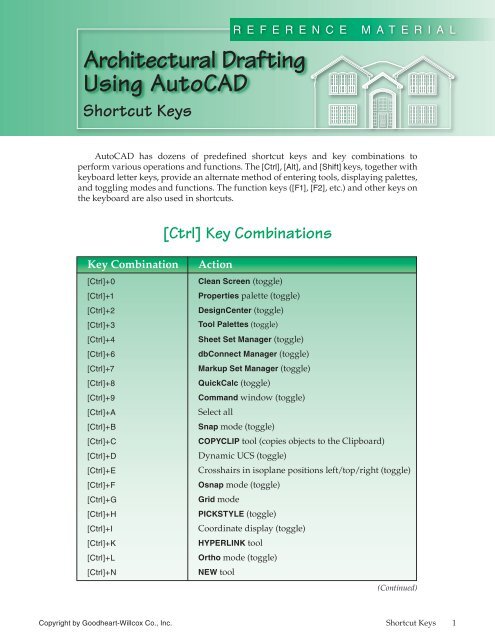
Here are the top 43 keyboard shortcuts for Microsoft Windows. You can use this list for reference, and if you need a more detailed explanation of a shortcut, scroll down.
Navigating in Windows
- Open the Start menu: Win
- Open the right-click Start button menu: Win + X
- Search: Win + S
- Open Settings: Win + I
- Open the Action Center: Win + A
- Open File Explorer: Win + E
- Open the Game Bar: Win + G
- Open the Run window: Win + R
- Open the Ease of Access Center: Win + U
- Show or hide the desktop: Win + D
- Open Task Manager: Ctrl + Shift + Esc
- Lock Windows: Win + L
- Open Lock Screen: Ctrl + Alt + Del
- Talk to Cortana: Win + C
Working with Windows
- Snap a window: Win + Left Arrow or Win + Right Arrow
- Minimize all open windows: Win + M
- Restore minimized windows: Win + Shift + M
- Minimize everything except the active window: Win + Home
- Maximize the height of a window: Win + Shift + Up Arrow
- Minimize the selected window: Win + Down Arrow
- Close the current window: Alt + F4
Working with apps
- Cycle through apps in the taskbar: Win + T
- Cycle through open apps: Alt + Tab
- Switch to an app on taskbar: Win + [number]
- Right-click an app on the taskbar: Win + Alt + [number]
Working with virtual desktops
- Open the Task View: Win + Tab
- Add a new virtual desktop: Win + Ctrl + D
- Switch to the next virtual desktop: Win + Ctrl + Right Arrow or Win + Ctrl + Left Arrow

Taking screenshots
- Screenshot the entire desktop: PrtScn
- Screenshot the selected window: Alt + PrtScn
- Save a screenshot of the desktop: Win + PrtScn
Essential shortcuts
- Select All: Ctrl + A
- Copy: Ctrl + C
- Cut: Ctrl + X
- Paste: Ctrl + V
- Undo: Ctrl + Z
- Redo: Ctrl + Y
- Close: Ctrl + W
- Delete immediately: Shift + Delete
- Cycle through options: Tab or Shift Tab
- Rename a file or folder: F2
- Windows 10 help online: Win + F1
- Refresh: F5
Windows keyboard shortcuts explained
If you find that the purpose or use of a keyboard shortcut listed above isn't obvious, refer to it below in this expanded list for more information.
Navigating in Windows
Open the Start menu: Press the Windows key. You can also press Ctrl + Esc.
Open the right-click Start button menu: Press Win + X to open the menu you see when you right-click Start. This is also known as the Quick Link menu.
Search: Press Win + S to put focus in the Start Search box at the bottom left of the taskbar.
Open Settings: Press Win + I to open Settings.
Open the Action Center: Press Win + A to open the Action Center pane on the right side of the screen.
Open File Explorer: Press Win + E to open a File Explorer window. You can open multiple windows this way.
Gallery: Simple solutions to fix basic computer problems (StarsInsider)
Open the Game Bar: Press Win + G to open the Game Bar and gaming controls.
Open the Run window: Press Win + R to open the Run window for quickly starting programs, opening locations on your computer, and more.
Open the Ease of Access Center: Press Win + U to open the Ease of Access section of the Settings app.
Show or hide the desktop: Press Win + D to minimize all windows and show the full desktop. Press it again to restore the windows – but you can only restore windows automatically if you do it right away.
Open Task Manager: Press Ctrl + Shift + Esc to open the Task Manager.
Lock Windows: Press Win + L to instantly lock Windows.
Open Lock Screen: Press Ctrl + Alt + Del to open the lock screen, which provides multiple options for locking Windows or switching user accounts.
Talk to Cortana: Press Win + C to put Cortana in 'listening' mode (if Cortana is enabled).
Working with Windows
Snap a window: Press Win + Left Arrow to snap the active window to the left half of the screen. Press Win + Right Arrow to snap it to the right half of the screen. You can also press either shortcut repeatedly to cycle through all the window position options.
Minimize all open windows: Press Win + M to minimize all windows and reveal the desktop.
Find Shortcuts On Computer
Restore minimized windows: Press Win + Shift + M to restore all windows, if you do it right after pressing Win + M.
Minimize everything except the active window: Press Win + Home to minimize all windows except the active one. Press it again to restore all windows.

Maximize the height of a window: Press Win + Shift + Up Arrow to make the active window as tall as the desktop without changing its width.
Minimize the selected window: Press Win + Down Arrow to minimize the selected window. It's like the opposite of Win + Home.
Close the current window: Press Alt + F4 to close the current window or program. You might be asked if you want to save your work before the window closes.
Working with apps
Cycle through open apps: Press Alt + Tab to see all the open apps. Press Alt + Tab repeatedly to cycle through the options.
Shortcut Keys In Microsoft Word
Cycle through apps in the taskbar: Press Win + T repeatedly to cycle through the apps in the taskbar. When you reach the app, you want to run or expand, release the keys and press Enter. To cancel, press Esc.
Switch to an app on the taskbar: To open or expand a particular app in the taskbar without cycling through them, press Win and the number that represents where the app is in the taskbar. For example, if you want to open a web browser, which is the first entry on the left side of the taskbar, press Win + 1.
Right-click an app on the taskbar: To open the right-click context menu for a particular app in the taskbar, press Win + Alt and the number representing where the app is in the taskbar.
Working with virtual desktops
Open the Task View: Press Win + Tab to open the Task View that shows your available virtual desktops and your app timeline.
Add a new virtual desktop: Press Win + Ctrl + D to create a new virtual desktop.
Switch to the next virtual desktop: Press Win + Ctrl + Right Arrow to cycle through all virtual desktops in the order they appear at the top of the Task View. You can also press Win + Ctrl + Left Arrow to cycle through them in the opposite order.
Taking screenshots
Screenshot the entire desktop: Press PrtScn, which you can usually find in the top row of your keyboard, to capture a screenshot of the whole desktop. It is copied to the clipboard.
Screenshot the selected window: Press Alt + PrtScn (look for this key in the top row of your keyboard) to capture a screenshot of the active window. It is copied to the clipboard.
Windows 10 Shortcut Keys Enable
Save a screenshot of the desktop: Press Win + PrtScn (look for this key in the top row of your keyboard) to capture a screenshot of the entire desktop. It is automatically saved to the Screenshots folder in Pictures.
Shortcut Keys In Keyboard
Essential shortcuts
Select All: Press Ctrl + A to select all the items in the current folder or location.
Copy: Press Ctrl + C to copy the selected items or content to the clipboard.
Shortcut Keys Of Computer
Cut: Press Ctrl + X to cut the selected items or content and place them in the clipboard.
Paste: Press Ctrl + V to paste the clipboard contents to the current location.
Undo: Undo the last action you took by pressing Ctrl + Z.
Redo: Press Ctrl + Y to perform the last thing you did again if it's possible. If Windows can't redo the previous action, nothing will happen.
Close: Press Ctrl + W to close the current window (it's the same as Alt + F4). You might be asked if you want to save your work before the window closes.
Delete immediately: Press Shift + Delete to delete the current item right away, without going to the Recycle Bin first. If you delete a file or folder this way, it cannot be undone or recovered.
Cycle through options: Press Tab repeatedly to cycle through a list of options. You can press Shift Tab to cycle through in the opposite direction.
Rename a file or folder: Press F2 to edit the name of a selected file or folder.
Windows 10 help online: Press Win + F1 to open a web browser to the Windows 10 help and support page.
Refresh: Press F5 to reload or refresh a web page.